Industrial Automation
A Complete Guide for Modern Manufacturing.
12/18/20253 min read
Industrial automation has become one of the most important pillars of modern manufacturing. Today, factories of all sizes—especially small and medium factories—are adopting automation to improve productivity, reduce costs, and stay competitive.
This guide explains industrial automation from the basics, its real impact on manufacturing, why it has become essential, and how small factories can start their automation journey step by step.
What Is Industrial Automation?
Industrial automation means using machines, control systems, and software to perform production processes with minimal human involvement.
Instead of relying entirely on manual labor, automation allows machines to:
✔ Perform repetitive tasks
✔ Maintain consistent quality
✔ Operate with higher speed and accuracy
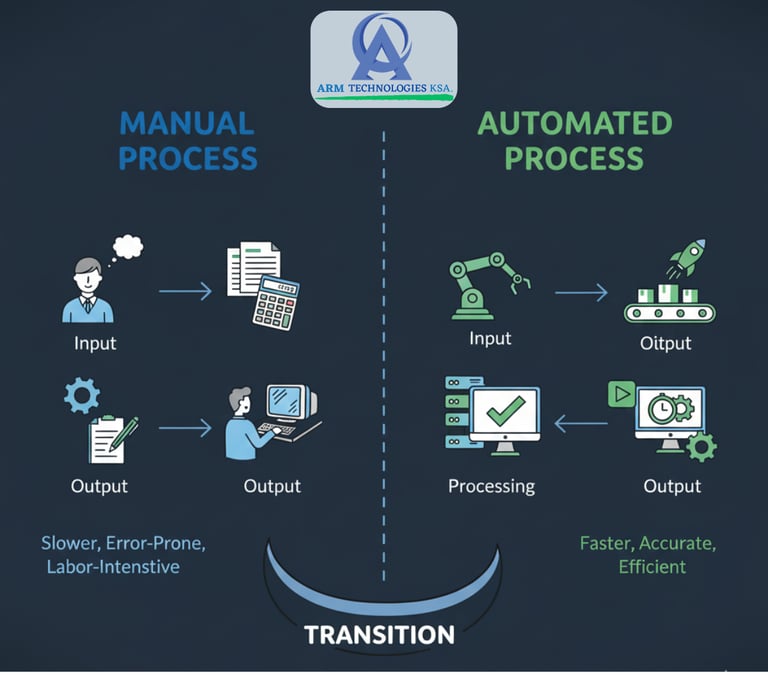
Why Industrial Automation Is Important Today?
Manufacturing requirements have changed. Customers now expect:
✔ Consistent product quality
✔ Faster delivery times
✔ Competitive pricing
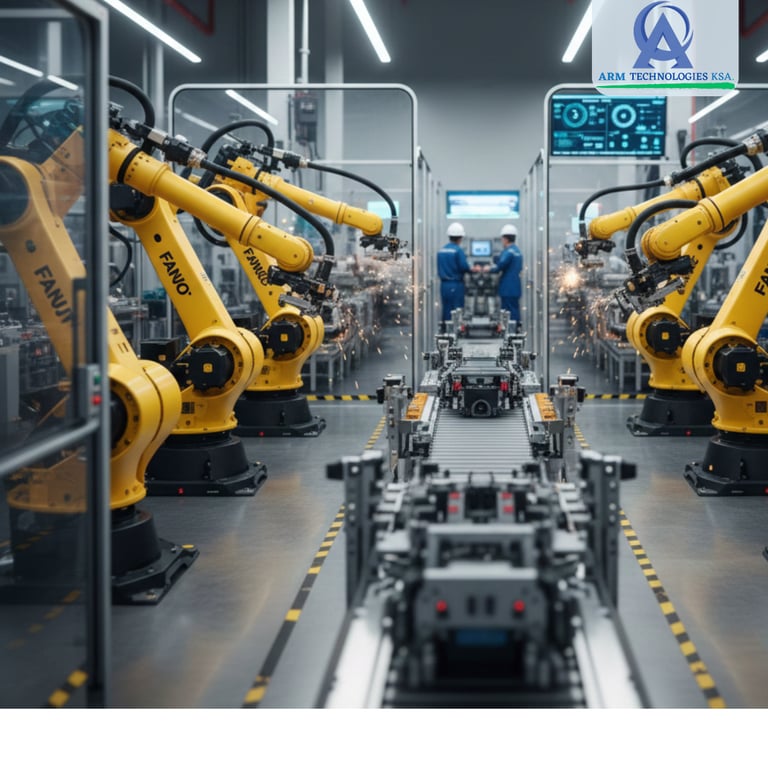
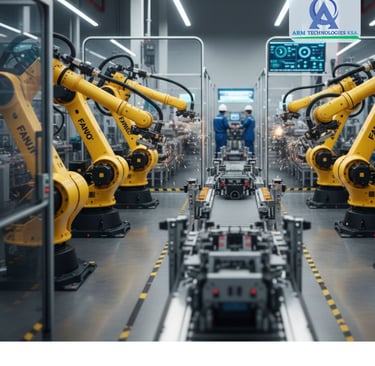
Manual processes alone can no longer meet these expectations.!!
Automation helps manufacturers:
Reduce human error
Increase output without increasing labor
Improve machine utilization
Achieve predictable results
How Industrial Automation Works
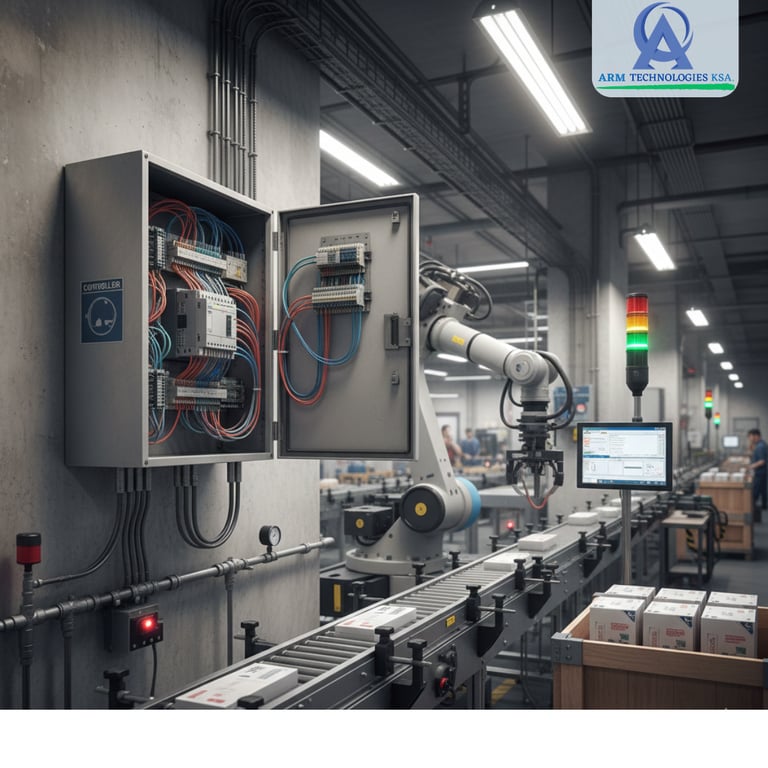
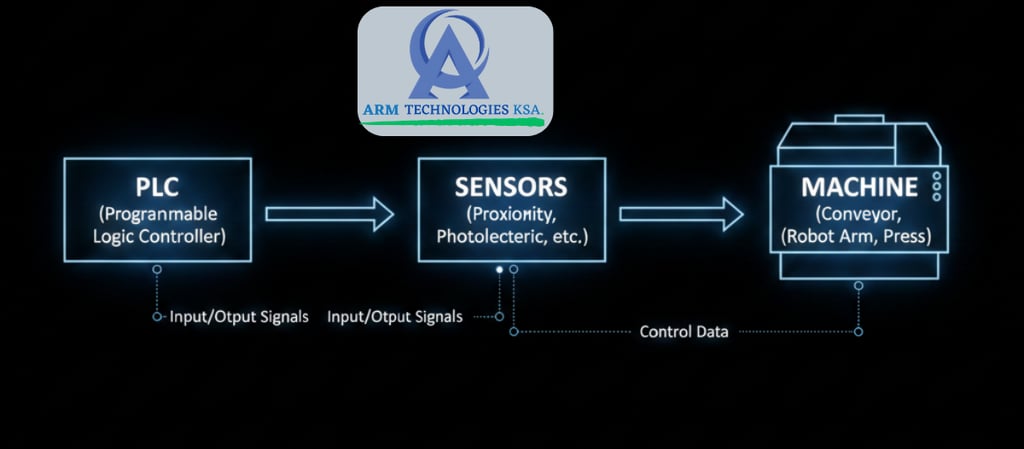
An automated system is built from several key elements working together:
1- Sensors
Sensors detect position, speed, temperature, or pressure and send signals to the control system.
2- Controllers (PLC / CNC / Control Units)
Controllers process sensor data and make decisions based on programmed logic.
3- Actuators and Machines
Motors, robotic arms, and machines perform physical actions.
4-Human Interface (HMI)
Operators monitor and control the system through screens and dashboards.
The Real Impact of Industrial Automation on Factories
Increased Productivity
Automated machines work continuously with consistent performance.
Improved Accuracy and Quality
Automation eliminates variations caused by manual work.
Reduced Costs
Lower scrap, less rework, and optimized labor usage.
Better Safety
Machines handle dangerous or repetitive tasks.
Industrial Automation in Manufacturing: Improving Productivity, Accuracy, and Growth
Industrial automation has become a core pillar of modern manufacturing. It combines control systems, software, machinery, and advanced technologies to automate industrial processes, reduce human intervention, and improve production efficiency.
Today’s factories—whether small workshops or large industrial plants—face growing pressure to increase output, maintain quality, and reduce operational costs. Industrial automation provides a practical and scalable solution to meet these challenges.
What Is Industrial Automation?
Industrial automation refers to the use of automated control systems such as PLCs, sensors, actuators, robotics, and software to operate machinery and production processes with minimal manual input.
Instead of relying solely on human labor, automated systems ensure:
✔ Consistent machine performance
✔ Accurate process control
✔ Reliable and repeatable results
Automation transforms traditional manufacturing into smart, data-driven production environments.
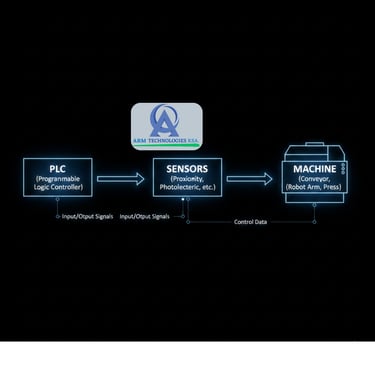
Why Industrial Automation Is Becoming a Necessity
Automation is no longer a competitive advantage—it is a necessity driven by real industrial challenges.
1. Rising Production Demands
Manufacturers are expected to deliver more, faster, and with higher quality. Manual processes struggle to meet these expectations consistently.
2. Skilled Labor Shortage
Finding and retaining skilled operators is increasingly difficult. Automation supports existing teams by reducing repetitive tasks and minimizing human error.
3. Quality and Consistency Requirements
Automated systems maintain stable parameters, ensuring uniform product quality across every batch.
Industrial Automation for Small and Large Factories
Small and Medium Factories
Small factories often operate with limited manpower and tight margins. Automation helps them:
Improve efficiency without increasing headcount
Reduce dependency on skilled labor
Compete with larger manufacturers
Small automation projects often deliver faster ROI due to focused implementation.
Large Manufacturing Plants
Large factories use automation to:
Manage complex production lines
Increase throughput
Maintain strict quality standards
Optimize large-scale operations
Automation allows large plants to scale efficiently while controlling costs.
Key Applications of Industrial Automation
Industrial automation can be applied across multiple manufacturing processes, including:
CNC machine automation
Robotic loading and unloading
Automated inspection and measurement systems
PLC-controlled production lines
Conveyor and material handling systems
Predictive maintenance and monitoring
Each application reduces manual intervention while increasing reliability and efficien
Industrial Automation as a Long-Term Strategy
Automation is not a one-time upgrade—it is a long-term manufacturing strategy.
By adopting automation gradually, manufacturers can:
Improve current operations
Prepare for future expansion
Adapt to market and demand changes
Integrate smart factory concepts
Factories that invest early in automation are better positioned for sustainable growth.
Why Choose ARM Technologies KSA for Industrial Automation?
At ARM Technologies KSA, we deliver tailored industrial automation solutions designed to match each client’s operational needs.
Our expertise includes:
Industrial automation system design and integration
CNC automation and upgrades
PLC programming and control systems
Machine retrofitting and optimization
Testing, commissioning, and operator training
We focus on practical, scalable automation that delivers measurable results—not unnecessary complexity.
Ready to Automate Your Manufacturing Process?
Whether you operate a small workshop or a large manufacturing facility, industrial automation can transform your production efficiency, accuracy, and growth potential.
📩
rfq@armautomationksa.com 📩
sales@armautomationksa.com 🌐 www.armksa.com


KAWASAKI ROBOTS
FANUC ROBOTS
WATER BOTTLE HANDLING
ROBOTICS PALLATIZING
Follow us
OUR ADDRESS
Building No: 4346, 7722, Office No 210, 2nd floor,
King Fahd Bin Abdulaziz Road , 35627 Al Khobar
Saudi Arabia